Tuesday, April 14, 2015

Ode to a Rainy Day


I love a rainy day,
A damp, dreary day –
A day when the rain falls
Steady and constant. 

Give me a cool, rainy day –
A hot one defeats the purpose.
When I get hold of a good, rainy day
I never want to let go of it.

I’ll drink lots of coffee,
Hot and strong,
Because coffee says, “morning,”
And I want the morning to last.
 
I want to spend hours reading the paper,
Listening to music, reading for pleasure,
Writing, and playing board games.
Maybe I’ll pound my drums or strum my guitar for a while.

The next thing I know
It’s three in the afternoon
And I think,
God, the day is slipping away!

Pretty soon it’s six
And time for supper.
Eat and set the dishes aside –
The work will wait for tomorrow.

Grab a good book and an afghan,
And curl up on the couch
For the evening,
While the rain continues to fall.

Before very long it’s time for bed
And if I’m lucky,
The sounds of the rain
Will sing me to sleep.

Tuesday, April 7, 2015

The Last Oil Change

We were dirt poor back in 1979.  I was a full-time law school student.  Susan was a teacher, but the schools weren’t hiring.  She ended up working as a secretary at the University of Pittsburgh for a poverty-level wage and typed papers for graduate students to supplement our meager income.  We lived in a roach-infested apartment in Mt. Oliver and drank powdered milk to stretch our money.  Nevertheless, we were optimistic about the future, and decided to drive to North Carolina for a vacation.  My job was to change the oil in our car, so we could leave early the next morning for our long drive from Pittsburgh to the Outer Banks.

         We owned a stripped down 1976 Plymouth Duster with a three-speed stick shift on the column.  It had Chrysler’s terrifically reliable slant 6 engine.  Based on prior experience with that engine in my father’s 1962 Plymouth, I knew that changing the oil could be a challenge.  The oil filter was the key.  It was hard to get to on a slant 6 and seemed to work itself tighter as you drove the car.  Nevertheless, I was committed to doing the job myself.  I had changed oil many times before and figured we could use the money I saved to do something special on our vacation.  So I bought a new oil filter and six quarts of oil.  Armed with my toolbox and oil filter wrench, I was ready to go.


I crawled under the car, loosened the oil pan nut and drained the oil into an old dishpan.  So far, so good, I said to myself.  Then I got the oil filter wrench and crawled back under the car to remove the oil filter.  It wouldn’t budge.  I exerted some pressure.  Dammit!  The old filter had started to crumple.  I better stop before I ruin this filter, I thought.  If I ruin it and still can’t get it off, I won’t be able to drive the car anywhere.  So I decided to put the old oil back in the engine, and I drove the car to a local gas station to get help.
The mechanic put the car on a rack and lifted it into the air.  He was able to quickly and easily loosen the oil filter. 
“Do you want me to do an oil change for you?” he asked. 
“No,” I replied.  “Just tighten it lightly so I can get it home.  I’ll change the oil myself.”  He charged me a nominal fee, and I drove back to our apartment. 
Our apartment was on the second floor of a three-story building that was built into a hillside.  The parking lot was in the rear of the building. It was built on a cliff that rose about fifteen feet above our 2nd floor level apartment to nearly the height of the building’s third floor.   Stairs led from both sides of the parking lot down to the second floor apartments.  A central staircase led from the parking lot to the third floor balcony that extended across the back of the building.  Pillars supported the balcony on its right and left corners and on either side of the central staircase.  The parking lot was slanted toward the gulf between the cliff and the building. 
I drove down the alley behind our apartment building and backed into the parking lot. I wanted the car to face uphill to make it easier to crawl under the engine compartment.  I immediately got to work and re-drained the old oil.  I easily removed the old oil filter thanks to the help from the service station.  I installed the new filter and put in the new oil.  Everything went smoothly.  I now just had to start the motor and check for leaks. 
I started the engine, and everything seemed fine.  I depressed the clutch and shifted the car into neutral.  I made sure the hand brake was well set and got out of the car.  I crawled underneath the front of the car and looked for leaks.  I didn’t see any.  I had successfully completed the oil change!
Suddenly, I heard a click and the car started to move.  I jumped out from underneath it and saw it starting to roll toward the edge of the cliff.  The hood was open so I grabbed the front of the car.  But there was no way I could hold back a two-ton automobile as it started to roll over the edge.  “Oh, my God!  Noooo!” I screamed. 
Just as the car was rolling over the cliff, the front wheels hit a bump and turned slightly causing the rear fender to collide with one of the pillars near the third floor steps.  This collision stopped the car’s descent but left my car suspended in mid-air with one front tire planted on the cliff and the rear fender wedged against the pillar.  It looked like it could go crashing down into the pit at any moment.  “My God, My God!” I screamed, and started to hyperventilate.  The third floor neighbors came out to see what was going on. 
I ran into my apartment.  I was unsure of what to do next.  I called AAA and told them I had an emergency and needed a tow truck as quickly as possible.  I called Susan at work and told her I had destroyed our vacation by wrecking the car.  I started thinking of all the idiotic mistakes I had made.  Why hadn’t I just allowed the garage to change the oil?  How could I be so stupid not to put blocks behind the tires before I got out of the car to check for oil leaks? 
A tow truck arrived sooner than I expected. 
“I heard the call on the radio and came right away,” the driver said eyeing up my car.  “I think I can get you out of there.” 
“Are you with AAA?” I asked.
“No, so this will cost you,” he replied.  “Or you could just wait for the AAA tow truck if you want.”
I looked at my car which hung, precariously balanced over the abyss.  Whatever it cost for the tow truck couldn’t compare to the cost of replacing the car.  I knew I had no choice.  “Go ahead,” I told him.  “And please hurry.” 
I could hardly bear to watch as he connected cables to the car’s front end.  While he was working, the AAA tow truck arrived.  “I’m sorry, but I’ve already hired this guy to do the job,” I told him. 
“That’s okay,” he said.   “I think I’ll just stick around to watch this.”
The other tow truck operator checked the cables and engaged the mechanism on his truck.  The cables tightened and the car started to move.  At first I thought it would still fall, but the tow truck operator must have known what he was doing.  The wood from the supporting pillar groaned as the car was slowly lifted from its resting place.  Metal ground against concrete as the car was dragged slowly across the edge of the cliff.  Finally, the rear wheels were resting on solid ground, and then the car was pulled back into the parking lot. 
The tow truck operator unhooked the cables from my car, and I happily paid his fee.  I looked the car over.  There was a dent in the rear fender where it had been wedged against the pillar.  Outside of that, I could not detect any damage.  I started it up and everything worked fine.  I parked the car, and called Susan.
“You won’t believe this, but the car is okay,” I told her.  “I mean, it has a dent, but everything else works, and we can still leave for our vacation tomorrow.”
“You’re telling me you were under it when it started to move?” she said.  “You’re lucky to be alive!”
“I know.  When I think of how much of a tragedy this could have been, I know that God must have really been watching over me.”
We left early the next morning for the Outer Banks.  The car ran fine.  At one point, we noticed a rattle, but that was easily fixed at a service station along the way. 
We held onto that car for a couple more years until I was out of law school and Susan got a job as a teacher.  Then we bought a brand new car and placed an ad in the newspaper to sell the Duster.  A Brazilian student offered to buy it over the phone, sight unseen, and the Duster was gone from our lives.  However, the experience of that oil change has never left me.  I’ve taken my cars to service stations ever since!

Friday, March 6, 2015

The Green Gargoyle

“What is that?” I asked my brother Ron as I stared at the green-skinned gargoyle with the huge teeth in the driveway across the street.  Ron had invited my family to have Easter dinner at his house.  “Is that a Buick?” I asked.  “It sort of looks like one with that massive chrome grille – but not exactly like any Buicks that I remember.”
            “I think it’s a DeSoto,” said Ron.
            “Really?  What year?”
            “I think it’s a 1950.  It belongs to my next door neighbor, Warren.  He moved in with his sister not long ago.  Warren is old – maybe in his mid-eighties.  He’s not allowed to drive anymore, so his sister is selling the car.  Why?  Are you interested in buying it?”
            I’ve always liked old cars, especially ones made in the 1950s.  When I was growing up, cars seemed to change completely every year.  As a young boy I would impress my father by being able to tell him the make and model year of almost any car he would point out.  I looked at the car through Ron’s front window.
            “It sort of has a blush of rust, but looks pretty solid.  Do you know if it runs?”
            “I’m pretty sure it does,” answered Ron.  “From what I understand from Betty – that’s Warren’s sister – Warren used it as his everyday car until his doctors told him he had to give up driving.”
            “Do you know how much they’re asking for it? I asked.
            Ron laughed.  “So you are interested.  Well, I’m not sure I have this right, but I seem to recall that Betty told me that someone offered to buy it for $2,500, and they turned him down.”
            “Dad, you should totally buy it!” exclaimed Anna, my teenage daughter.
            I thought about it for a few seconds.  “That’s still a lot of money,” I said.  “And if they turned down $2,500, they might be looking for a good bit more.”
            During dinner, I continued to think about the car.  While I love to look at old cars, I never thought I would be able to afford one.  Even if they wanted $5,000 for that thing, I figured it wasn’t outside the realm of possibility for me. 
            “So what do you think about that car?” I asked my wife, Susan after we had downed a few glasses of wine.
            “Are you seriously considering buying it?” Susan asked me.
            “Dad, you really need to buy it,” interjected Anna.  “It’s such a cool car.”
            “Well, if I could get it for less than $5,000, I think it would be really neat to buy it,” I said to Susan.
            “Well, we would be able to afford that.  If you really want it, go talk to them.  Maybe they’ll give you a neighborly discount since you’re Ron’s brother,” Susan said.
*          *          *
            I called a few days later.  I identified myself as Ron’s brother and made arrangements to come out and look at the car.  The next day, I drove there and knocked on the door.  Warren’s sister, Betty, appeared. 
            “So you’re interested in Warren’s DeSoto?” she asked, peering at me through the screen door.
            “Yeah, I’d like to look it over,” I replied. 
            We walked across the street to where the car was parked.  It appeared that Betty was going to do the negotiating for her older brother.
            “Does it run?” I asked.
            “Yes, but the battery died.  It will need a new battery to get it started.”
            Betty unlocked the front door.  I slid behind the huge steering wheel with an icon of Hernando DeSoto in its center.  What a rush!  I imagined heads turning as I drove around town in this 1950s-sized behemoth.  I slid back out and closed the door, then crawled underneath the car.  I wasn’t sure what I was looking for, but it seemed like something a person really checking out an old car should do.  To me it just looked like the underside of an old car.  I didn’t see any holes, heavy rust or things hanging down that looked like they shouldn’t be hanging down.  I took that as a good sign and slid back out.
            “Let’s take a look under the hood,” I said, trying to sound like I knew something about cars. 
            “Sure.  The hood release is inside,” Betty pointed.
            I opened the door again and pulled the hood release handle.  Then I released the catch and lifted the hood.  It weighed a ton.  I stared for a while at the engine.  “Yep, it has an engine,” I thought to myself.  After looking around the engine compartment for what seemed like an appropriate amount of time, I closed the hood.  Next I opened the trunk.  It looked clean and contained a spare tire and jack. 
            “Well, it looks pretty good to me,” I said.  “So what are you asking for it?”
            “What are you offering?” she responded, tossing the ball back into my court.
            I thought for a few moments how I should handle this negotiation with what looked to me to be a wiry old lady in her mid to late seventies.  If she turned down $2,500 like my brother said, how high should I go without costing myself more than I had to? 
            “How about $3,000?” I offered.
            “How about $2,500?” she shot back without blinking an eye.
            “Well, $2,500 sounds pretty good to me,” I smiled. 
            “I just want to be sure I’m finding a good home for Warren’s car,” she said.  “He loves this old car.  It belonged to our father.  We’ve known your brother Ron for years, so I feel I’m doing right by Warren selling it to you.  Another fellow offered me $2,500, but I didn’t like him and knew he wouldn’t be able to come up with the money, so I turned him down.”
            “Thank you very much,” I grinned.  “ I really will take good care of it.”

            Betty and I talked a while longer and arranged that I would meet her and Warren on Saturday to pay for the car and transfer the title.  I got in my boring minivan and drove away. In a matter of days, I would embark on a new adventure in my life – behind the wheel of a 1950 DeSoto! 

Tuesday, February 17, 2015

Bits & Pieces

Back in the 1960s when everyone was crazy for the Beatles, my favorite band was the Dave Clark Five.  Their first big hit in the U.S. was a song titled, “Bits & Pieces.”  I thought I would co-opt that title for this post which doesn’t have a singular focus, but rather, contains bits & pieces of my musings on a number of subjects.

Lesley Gore’s obituary was in today’s paper.  She died yesterday, February 16 of lung cancer.  In 1963, 16-year old Lesley hit the pop charts with “It’s My Party,” and followed that with the sequel, “It’s Judy’s Turn to Cry.”  She had other big hits including, “You Don’t Own Me,” “Sunshine, Lollipops” and “Maybe I Know.”  Baby boomers of a certain age won’t be able to read those titles without humming a few bars of Ms. Gore’s infectious tunes.  Rest in peace, Ms. Gore.  Your music will live on.

I grew up as a “yinzer” in an ethnic Pittsburgh household.  Either in spite of or because of that background, I worked hard to learn to speak grammatically correct English as a college student and then later as a lawyer.  I recognize that American English is not static, and we have to allow for its gradual evolution.  So when I hear someone say they are going to “lay down” for a while, I bite my tongue and think, “Maybe it’s not grammatically correct, but perhaps it will be someday.”  However, while recently listening to the radio, I thought I heard several announcers describe upcoming events in “Feb/yoo/ary.”  Way back in second grade, my teacher drilled into our brains that the correct pronunciation of the second month of the year is “Fe/brew/ary.”  Similarly, she insisted that the place to borrow books is a “lie/brary” and not a “lie/berry.”  I couldn’t believe that so many announcers could have skipped second grade, so I quickly checked my Merriam-Webster Online Dictionary.  I was amazed - no, astounded - to discover that the preferred pronunciation was exactly what I had been taught was just plain wrong.  I’m not sure when this changed.  I did some quick internet research and couldn’t find any article that pointed to a date or even described a transition from what I had learned to what has become today's norm.  It was as if history had been re-written.  Like a scenario out of Orwell’s 1984, it seemed that Febyooary was always the correct pronunciation.  I checked with my own children and found that they also had gone to the dark side and accepted that the silent ‘r’ is actually something real in the English language.  However, a web search for “silent r” yielded several sites which indicated that there were no American English words with a silent ‘r.’ I’m not sure how to reconcile that result with the current prevalence of Febyooary.  I suppose I could accept it if Merriam-Webster changed the spelling of the second month to Febuary to coincide with its pronunciation.  Or perhaps I just need to do some more research on the subject.  Maybe I should do that at the local liberry.


I started wearing bow ties about twenty years ago.  At first, I had one or two and wore them sparingly on special outings or to church.  I was too self-conscious to wear a bow tie at the office.  Bow ties had somehow gotten a bad reputation.  They branded you as professorial at best or more likely as some kind of nerd, loser or weirdo.  After all, Dagwood Bumstead wears bow ties in the comics as does Garfield’s Jon Arbuckle when the strip’s author is trying to make him look particularly geeky.  Nevertheless, whenever I wore a bow tie, people complimented me on how good I looked.  I never heard the same level of compliment when I showed up anywhere in a necktie.  Then about ten years ago, I screwed up my courage and decided to start wearing bow ties at the office.  I don’t know that they helped my career which had pretty much plateaued by then, but I got a lot of compliments and really felt they suited me.  Over those ten years, I have given increasingly more space on my tie rack to bow ties and less and less to neckties, which I rarely wear except perhaps to a funeral.  Bow ties seem somehow to be too joyous for a somber occasion.  At the same time, I have been gladdened to see that bow ties are having a resurgence.  At a recent meeting I attended, there were more bow ties than neckties.  I would like to take credit for this bow tie renaissance, but I think a lot of the credit has to go to actor Matt Smith.  Mr.Smith, who is most known for his role as the 11th Doctor on the BBC’s Doctor Who, repeatedly declared, “Bow ties are cool!”  Mr. Smith played the Doctor on the series from 2010 through 2013.  That’s just about the time period when bow ties started showing up in more than a few men’s stores, and men in their twenties started wearing them.  So thank you, Matt Smith, for making bow ties cool again, and me at least by association.  Mr. Smith as the Doctor also declared that fezzes are cool.  I’ve been a hat wearer for many years.  Maybe it’s high time I went looking for a fez. 

Friday, January 30, 2015

On the Radio

I don’t listen to the radio much anymore.  Sure, I turn it on when I’m in the car driving around town and running errands.  Then I’ll listen to NPR or the community radio station with its eclectic contemporary music format.  When these stations are in their fundraising mode, I’ll flip to the classic rock station or if I’m desperate, I’ll listen for a while to sports talk radio.  But I hardly ever turn on the radio at home.

Yet when I was growing up, the radio was an integral part of my life.  No, I’m not part of the generation that gathered with their families around the radio in the evening to hear one of those great shows like The Shadow.  My family had a television.  But the TV was never turned on in the mornings when we were getting ready for school.  Instead, my mom would be in the kitchen making coffee and putting out breakfast while listening to KDKA blasting its 50,000 watts into Pittsburgh’s airwaves.  Morning disc jockey Rege Cordic made us smile with his zany antics, and Ed Shaughnessy gave us the news and the all-important school closings.  Then, all summer long my parents would sit on the front porch to escape the heat while Bob Prince regaled us with baseball stories interspersed with the play-by-play from the Pirates game.  The radio was the only way to “see” a home game.

At my first communion party, the only present I really cared about was the transistor radio that my godparents bought for me.  Before that, I had annoyed everyone by walking around the house holding a cufflink box to my ear, pretending it was one of those miniature radios that I longed for.  When my brothers and I became old enough to do the dinner dishes, the radio was there in the kitchen to keep us company.  We listened to Chuck Brinkman on KQV spin the latest tunes from the Beatles, The Dave Clark Five and other groups that were part of the British Invasion.  My older brother tired of that style of music and turned to WAMO, intoducing me to Porky Chedwick, soul music and the Motown sound. 

In Junior High I did my homework listening to Terry Lee’s “TL Sound” on WMCK.  At ten o’clock, TL would switch to “Music for Young Lovers.”  Who could resist as the Duprees crooned, “See the pyramids along the Nile . . .?”  In the late 1960s, Motown gave way to psychedelic music and we all ran out to get FM radios so we could listen to WDVD and WYDD.  The FM DJs talked very low and really slow as they played entire record albums straight through.  My best friend joined the Columbia Record Club so he could get twelve albums for $1.99, despite having to buy a bunch more at the regular, exorbitant Club prices.  The radio helped us decide which ones to buy.  And when the Steelers finally started winning in the 1970s, we watched them on TV, but turned the sound down so we could listen to the radio announcers, Jack Fleming and Myron Cope, on WTAE.

I’m not sure when my love affair with the radio ended, but it was probably sometime in the late 1970s when stations started playing disco.  Techno-pop in the 1980s wasn’t any better and the only other choices seemed to be oldies and country.  What had been new and exciting album rock turned into classic rock – another form of oldies, featuring mostly Led Zeppelin, Lynyrd Skynyrd and the Steve Miller Band.
 

So now I rarely turn on the radio when I’m at home.  If I feel like listening to music, I’ll put on a record or CD.  My son recently suggested that I try Pandora, and that’s a nice source of music, but it lacks personality.  I guess WYEP, the community radio station, comes the closest to giving me what first attracted me to radio – identifiable personalities, contemporary music with occasional oldies, news and weather.  When I think about it, it’s actually a pretty good radio station.  Okay, I guess I’ve run out of excuses.  It’s time to go to their website and donate to their latest fundraising drive.

Sunday, January 4, 2015

New Year’s Revolution 2015


You say you want a revolution,
Well, you know,
We all want to change the world . . .*

When Barack Obama campaigned for the presidency in 2008, he promised bold change for America.  With Democratic majorities in both Houses of Congress, it appeared that he could indeed lead this country forward with daring new ideas, such as universal health care.  But two wars in the Middle East, a worldwide recession and the eventual takeover of Congress by conservative Republicans has caused his agenda for change to be severely scaled back.
 
In these final two years of his final term, the President has a choice.  He can sit back and wait with his veto pen to try to prevent the Republican Party from taking this country back to the 19th century.  Or he can use the bully pulpit and power of his office to boldly lead this country forward. 

So what kind of change should be on the President’s agenda as we begin this New Year?  There are many problems facing this country that cry out for action, such as the 14-year war in the Middle East, the nation’s crumbling infrastructure, gun violence and income inequality.  Taking action to address these problems is important, but is it revolutionary?  Would it change the world?


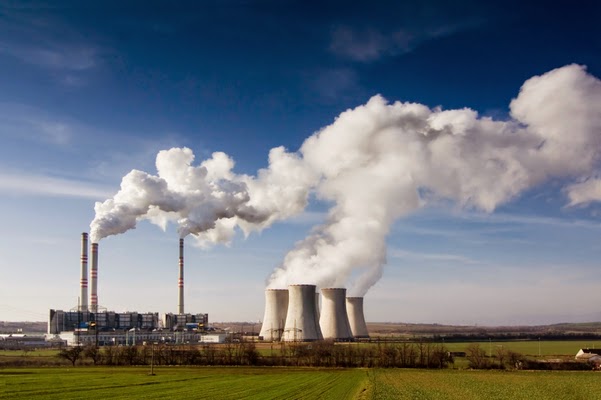
Revolutionary change is hard to come by.  It usually happens as the result of some extraordinary event or invention.  The invention of the wheel transformed ancient civilizations just as the invention of the computer has transformed modern society.  The widespread use of computers and other electrically powered appliances and devices could not have happened except for the revolutionary change that made electricity available in homes and businesses throughout the country.  That change resulted from the discovery that coal, oil and natural gas could be burned to produce steam to drive turbines that could generate energy that could be sent via wires to our homes and businesses.  Without electrification, we would be a far different society.

But scientists have discovered a huge downside to the generation of electricity from burning fossil fuels.  Burning these fuels releases carbon dioxide (CO2) which builds up in the earth’s atmosphere.  CO2 is a greenhouse gas, which means its buildup traps heat from the sun, which eventually will alter the climate of the planet – and not in a good way.

This nation’s energy needs will continue to grow as our population increases and our society continues to invent new technological devices that rely on electricity to make them work.  Conservation efforts can help to slow the demand for power, but such efforts inevitably will not be enough to reduce emissions of CO2 and other greenhouse gases that are causing changes to the earth’s climate.  Ultimately, we must reduce our national dependence on the burning of fossil fuels to generate power.  President Obama has taken action to commit the United States to reducing carbon emissions.  He has negotiated a treaty with China committing the U.S. to reduce carbon emissions by 28% below 2005 levels by 2025.  His EPA has proposed new rules to require power plants to substantially cut CO2 emissions.  These are important actions, but they can be undone by a future administration that refuses to acknowledge that climate change is occurring.  Also, since the CO2 already emitted can linger in the atmosphere for thousands of years, simple reductions may not be enough.  Many scientists are telling us that we need to get to zero carbon emissions to really have a chance of halting and reversing climate change. 

The use of solar, wind and similar renewable sources is a step in the right direction, and we must do all that we can to encourage the further development of these technologies.  But they will not be enough.  Therefore, just as President Kennedy challenged the nation to send a manned mission to the moon by the end of the 1960s, President Obama should announce a major initiative to produce commercially viable power from nuclear fusion in the next ten years.  Nuclear fusion, which produces no greenhouse gases, is the only known technology capable of replacing fossil fuels in supplying electricity to the nation’s power grid.  Fusion is being researched by various entities around the globe that are hoping for a breakthrough to eventually make it commercially viable.  However, a major development effort under government sponsorship could bring together the people and resources necessary to make it a reality in the short term.

Such an effort, if successful, and if shared with other nations, would achieve nothing short of saving the planet.  That would be quite a legacy, Mr. President.  And it is a change that could not be reversed or dismantled, no more than the computer could be replaced with the abacus.

So be bold; be revolutionary.  Yes, we all want to change the world.  And you should use the power of your high office to inspire us and lead us to that change.


*  Revolution, Lennon-McCartney, © 1968

Wednesday, December 10, 2014

GGOD X

Yes, this was my 10th or Xth Annual Goose Goofs Off Day. I looked it up. I don’t know why I use Roman numerals to count them. I suppose that in my book it is the Super Bowl of holidays. Since the Super Bowl uses Roman numerals to keep track, it logically seemed to be the appropriate way to keep track of my personal GGODs.


And that acronym, GGOD? I only started using it recently, but it also seemed logical and appropriate. After all, Goose Goofs Off Days are Gifts from God. Now some might think that Christmas has the best claim to being a gift from God. But without getting too heretical, I beg to disagree. Perhaps children can view Christmas as a gift, but for grownups Christmas is a huge pile of stress and work. Most of us spend weeks decorating, baking, shopping, cleaning our houses and wrapping presents just to name a few of the tasks leading up to Christmas. Then after Christmas we go back to stores to exchange presents such as clothes that don’t fit, we do more shopping to take advantage of after-Christmas sales, and then we must take down and put away all the decorations for another year. Christmas can be nice, but it’s no GGOD, that’s for sure. The hardest thing about GGOD is figuring out how you’re going to goof off.

The Mattress Factory
This year I just kind of puttered around the house during the morning, and before I could say, “I’m taking it easy today,” it was 1:00 in the afternoon.  I did some searching on the internet and decided to take a trip to the Mattress Factory, which is a museum of modern art on Pittsburgh’s Northside.  Exhibits are housed in three separate buildings within a block of one another.  There are also some outdoor installations.  Since it was a cold day, I stuck to the inside stuff.  I especially enjoyed the installations on the 4th floor of the main building.  They included “Damn Everything but the Circus,” by Benjamin Sota, the founder of the Zany Umbrella Circus, and “Diaspora,” by Ryder Henry.  Diaspora consists of an intricately constructed miniature futuristic city.  One could spend hours appreciating the architecture and construction of the various structures in that imaginary city. 

After spending a couple hours at the Mattress Factory, I decided to take a ride up the Allegheny River to the borough of Oakmont. Oakmont is mostly famous for the Oakmont Country Club which has hosted the U.S. Open golf tournament several times.  However, I went to Oakmont to visit the Mystery Lovers Bookshop.  Mystery Lovers is a small, independent book store.  I knew of them because they are a sponsor of a lecture series I attend called Literary Evenings.  While the lectures focus on the writing process, Mystery Lovers is there to sell books, which you can get signed by the author.  So I decided to take a GGOD trip to Oakmont to see their actual store.
It’s a far cry from Barnes & Noble, but that’s the whole idea.  In contrast to the big box stores, the owner greeted me when I walked in and offered me coffee and some dessert.  True to their name, they specialize in mystery books, but they also stock current books, especially those featured at the Literary Evenings.  I spent a fair amount of time browsing through the book shelves and finally settled on Plugged, by Eion Colfer.  Colfer is the author of the Artemis Fowl books that my youngest son enjoyed so much as a teenager.  I thought it would be interesting to see what Colfer’s books for adults are like. 

I completed my purchase, left Mystery Lovers and then drove a few blocks to a Panera Bread store.  I have a Panera Rewards card and knew I was due for a free pastry.  So I found a cozy chair and did some reading while enjoying some coffee and a bear claw.  Around 6:00 PM, I decided to head back home.  Dinner was effortless – microwaved leftovers.  Finally, a little time in the hot tub, some wine and a movie provided a perfect end to the perfect holiday.  Now I’m looking forward to taking it easy on GGOD XI!